Toilet Backup Flood Cleanup and Water Damage Restoration
A toilet backup might not sound like a major disaster, but the water damage it leaves behind can spread fast. Walls soak it up. Drywall holds moisture way longer than you'd think. And if it's not handled properly, you're looking at mold growth and structural damage down the road.
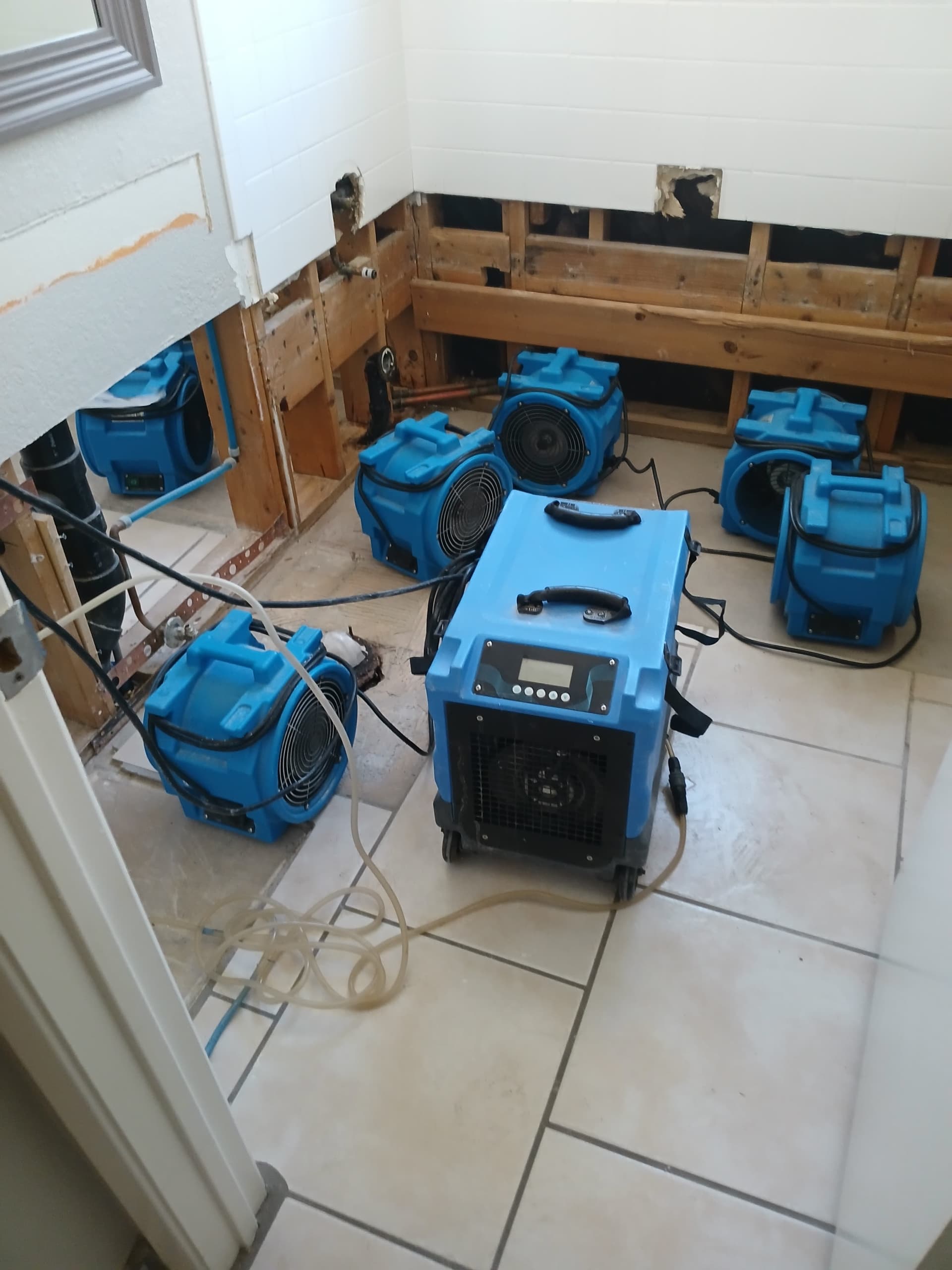
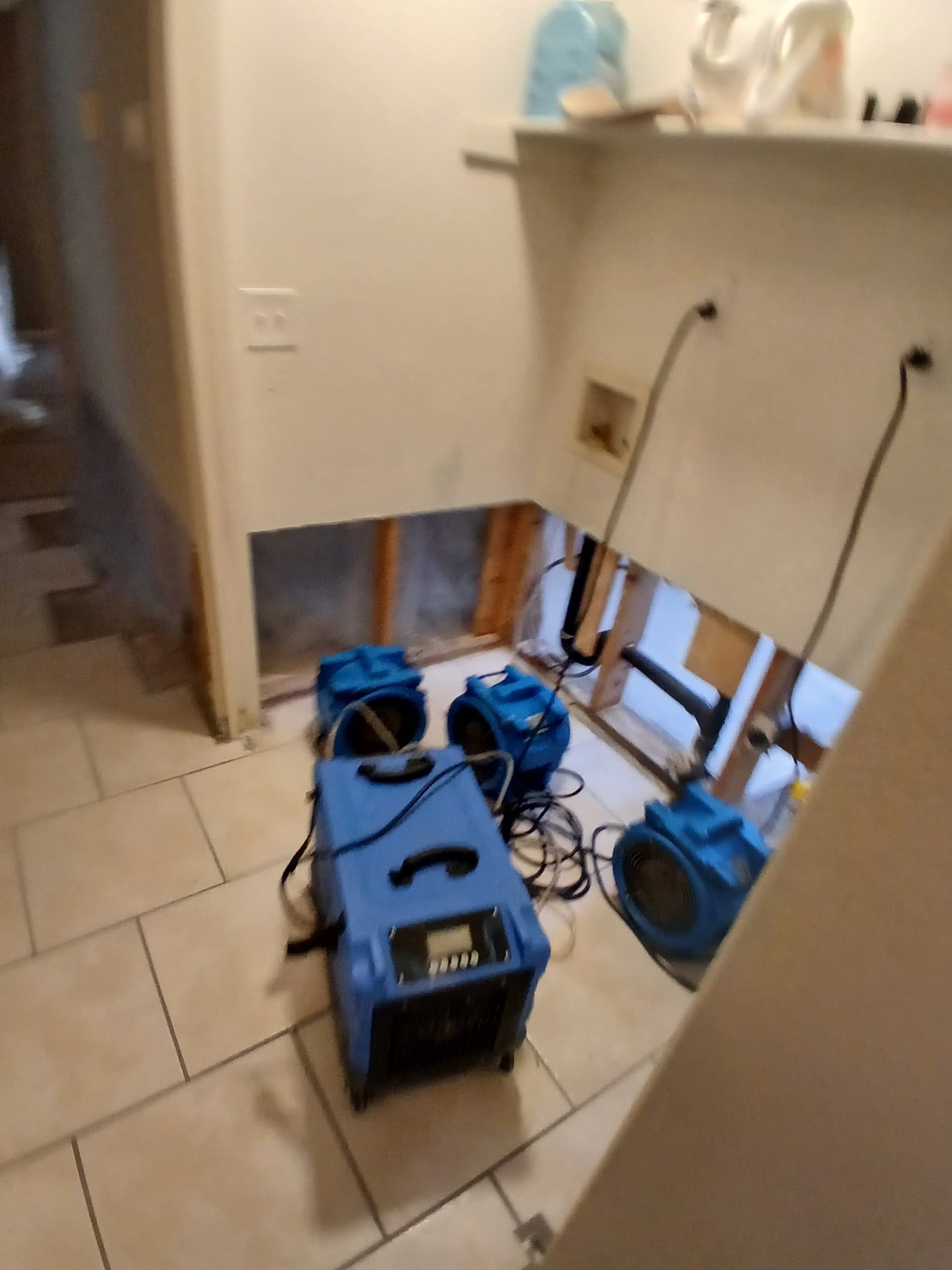
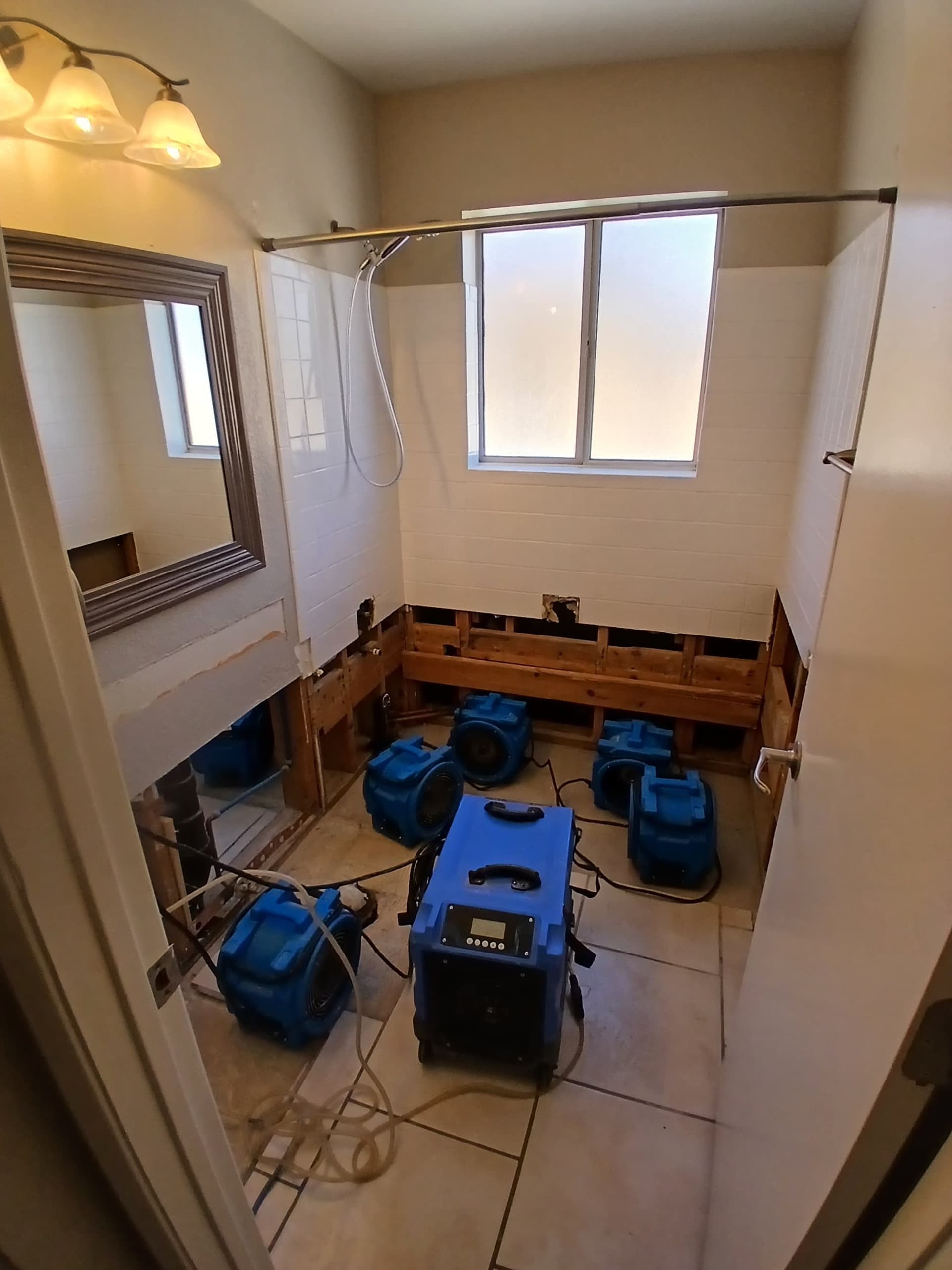
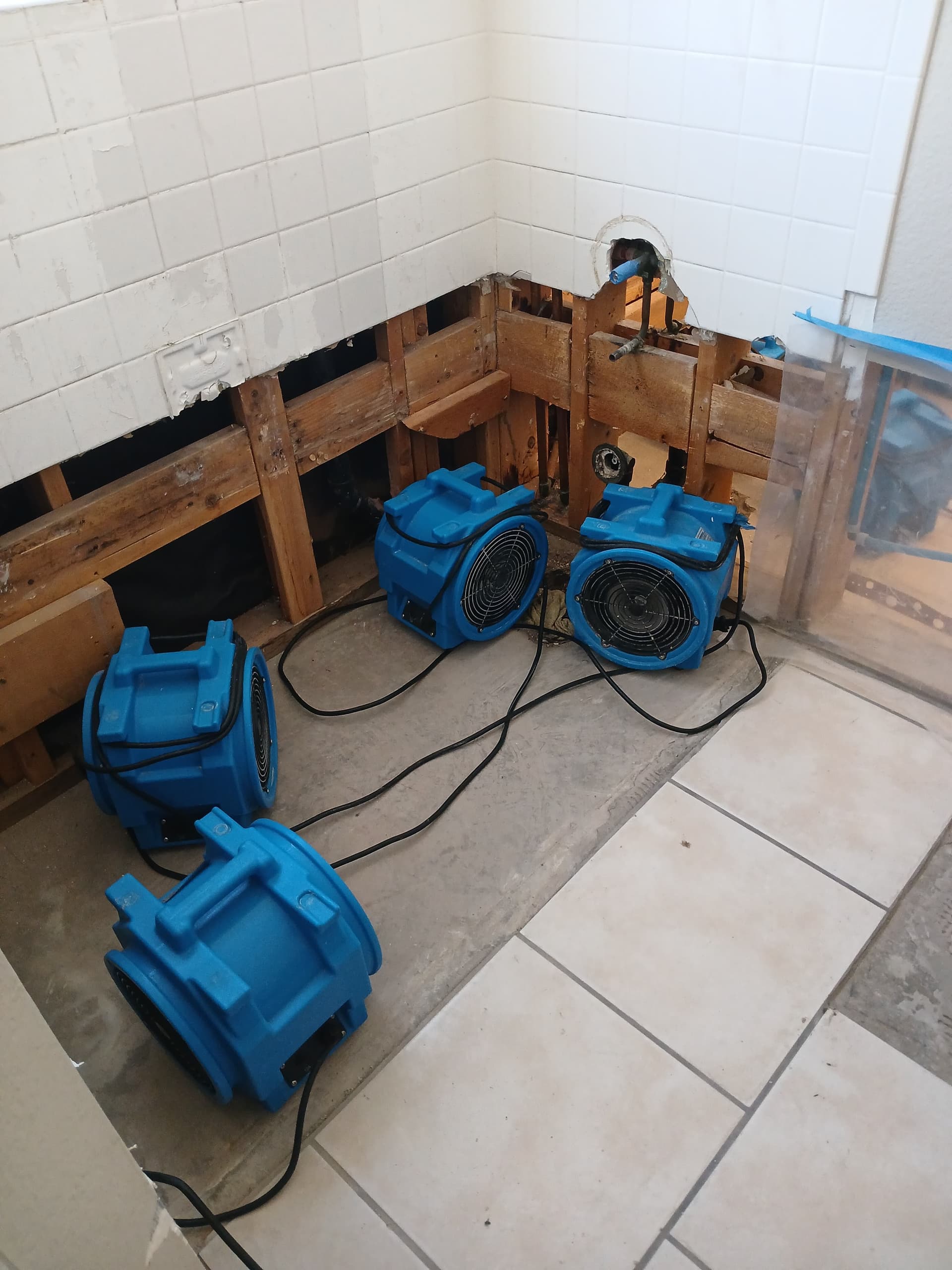
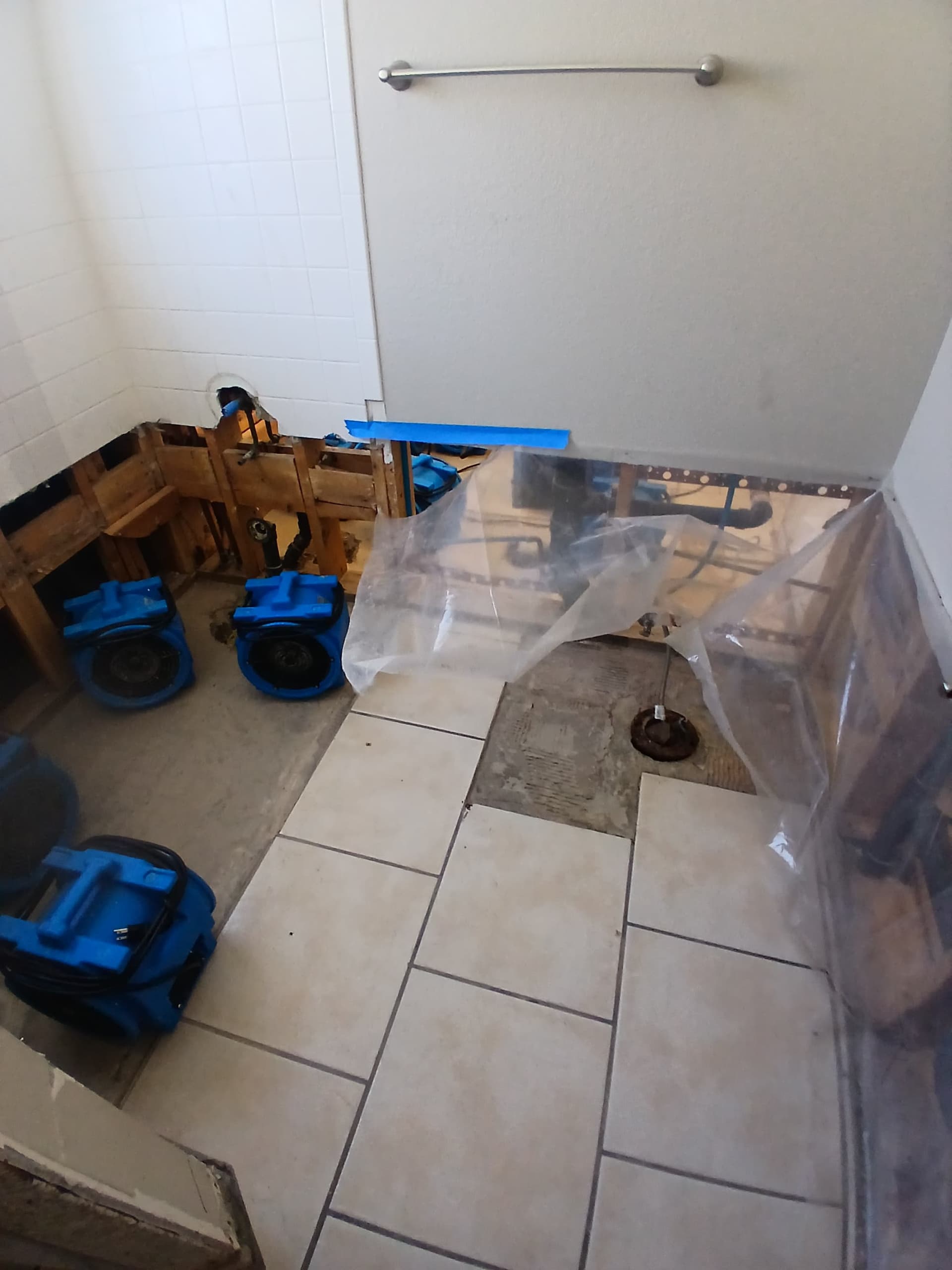
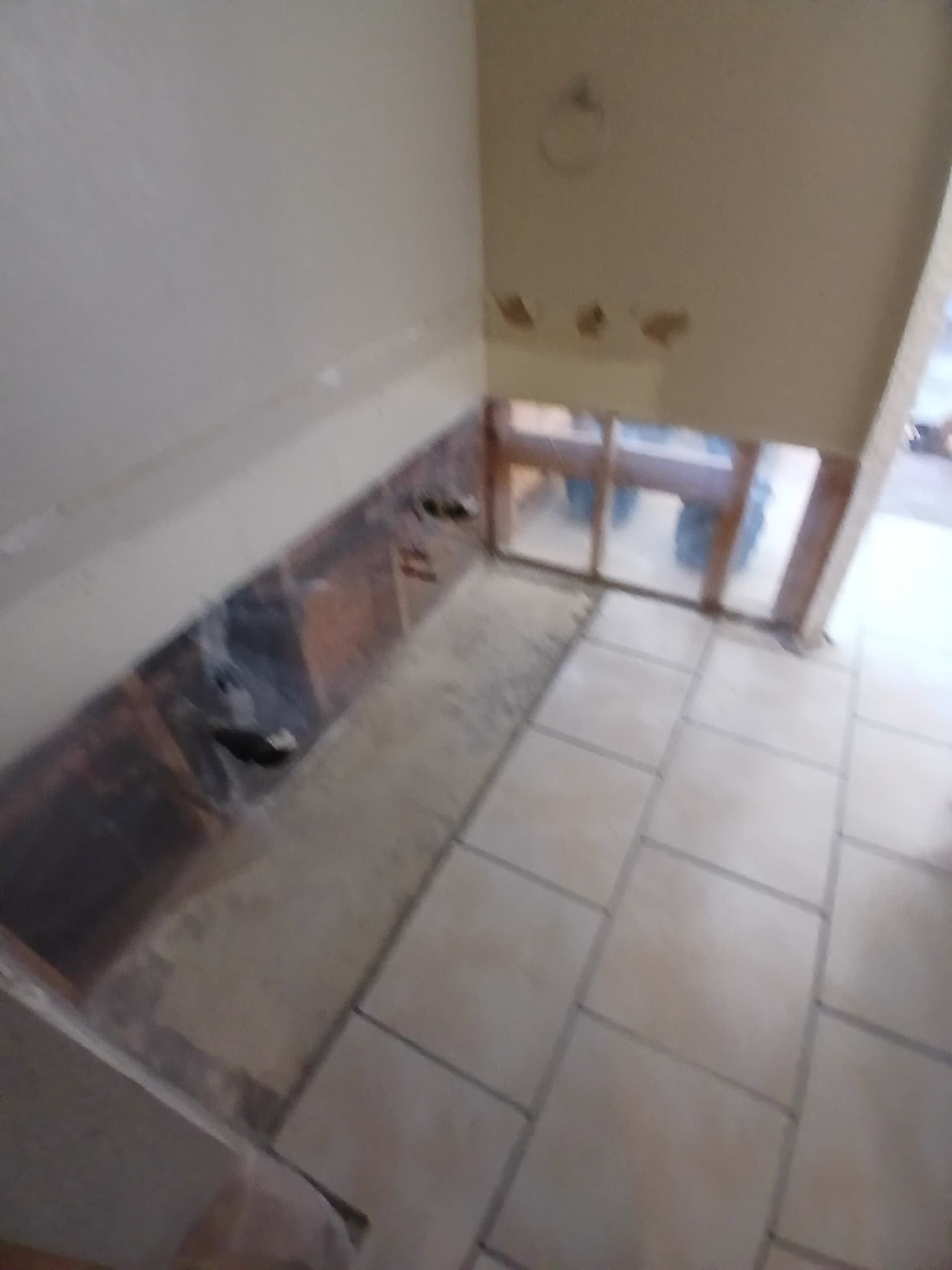
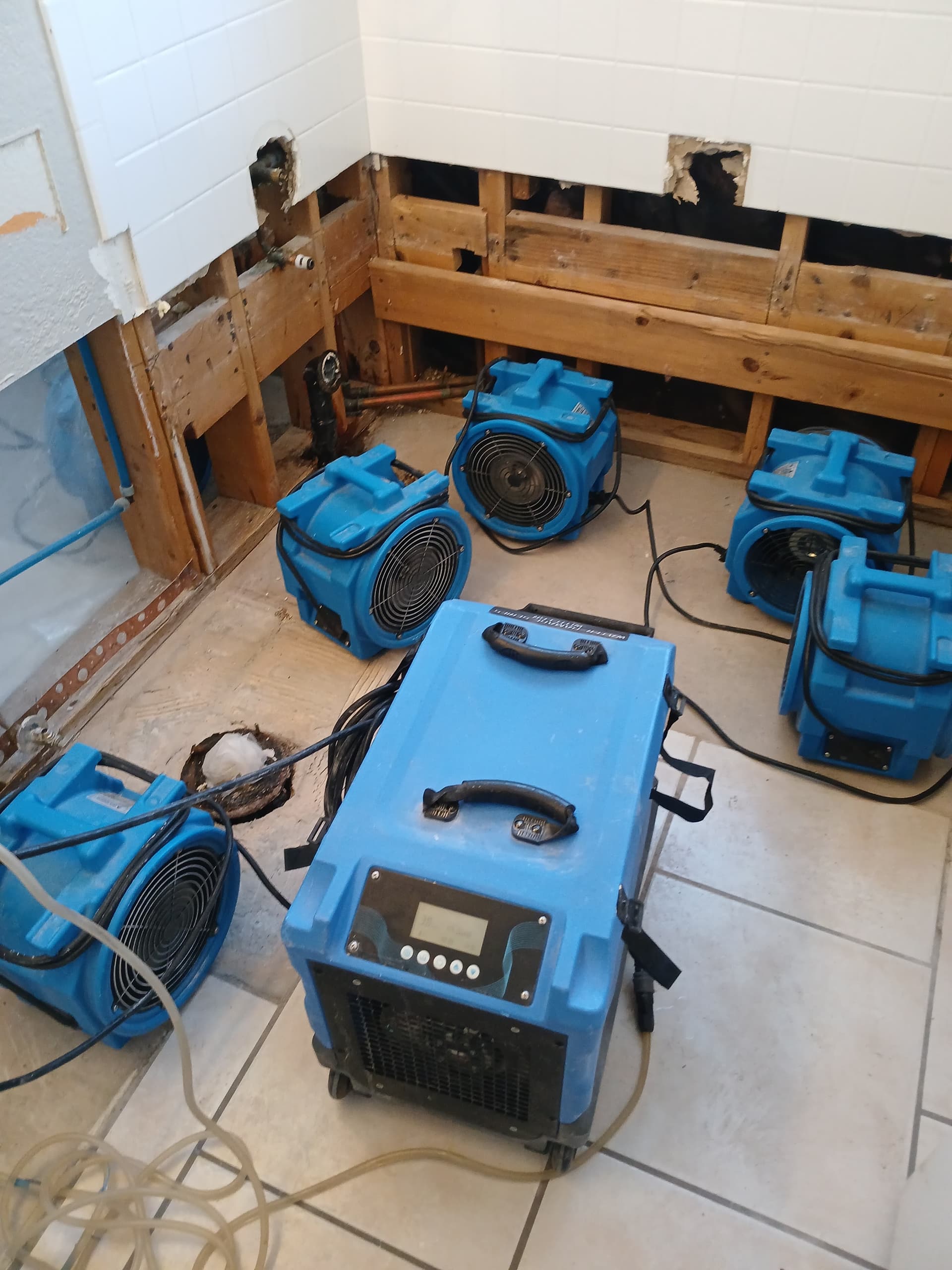
Here's what we were working with on this job - water had migrated into the walls throughout multiple bathroom areas. We pulled the damaged drywall and materials to expose the framing, which is the only real way to make sure everything dries out completely. Leaving wet material in the walls is how small problems turn into big ones.
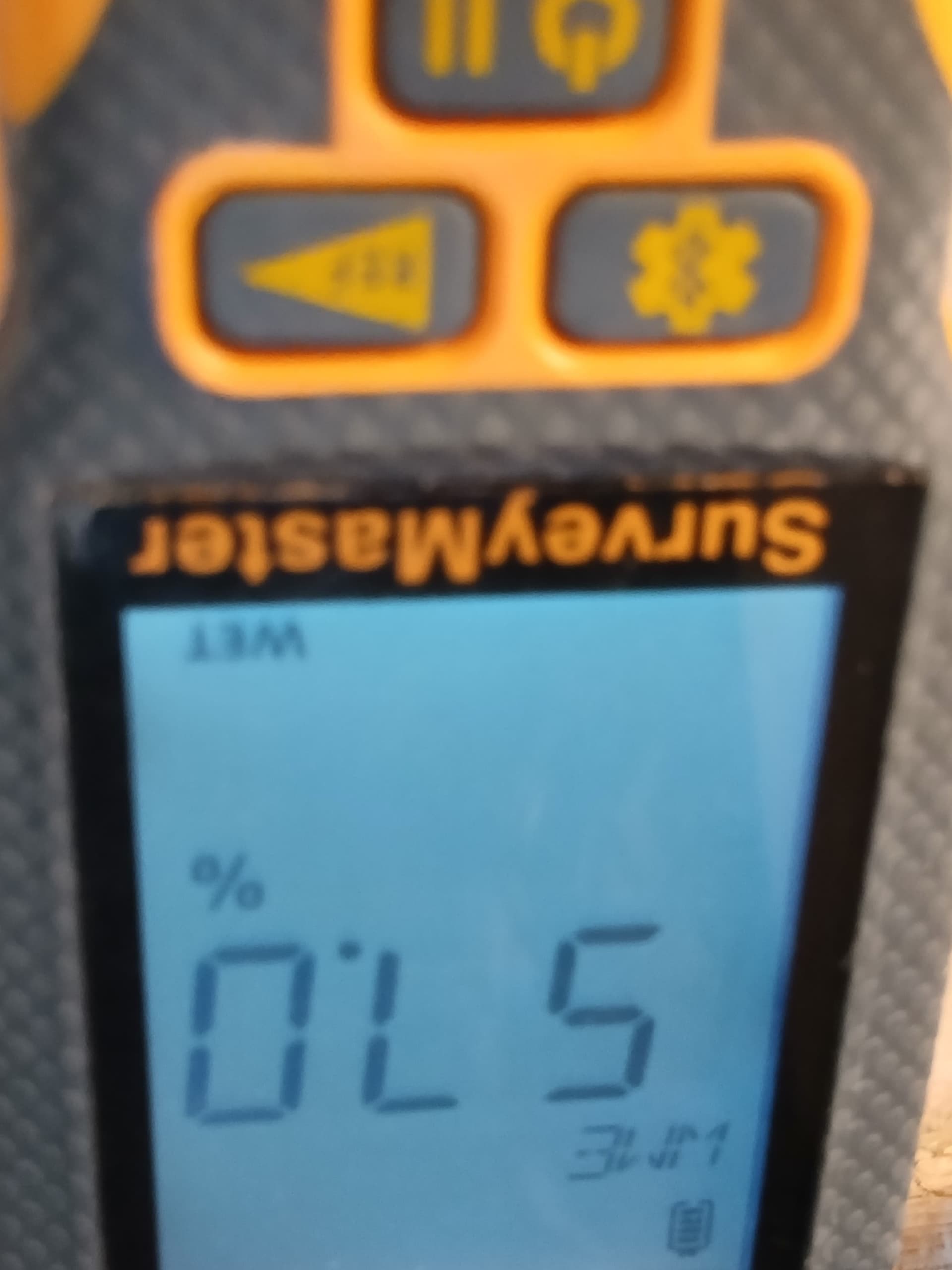
Once the demo was done, we brought in commercial air movers and a dehumidifier to push dry air through the exposed framing and pull moisture out of the space. This isn't a 'set it and forget it' step. We use a moisture meter to track readings throughout the drying process so we know exactly when the structure has reached safe moisture levels - not just when it feels dry.
We also used plastic sheeting to contain affected areas and protect the rest of the home during the process. Every step we take is about doing the job right the first time so the rebuild can start on solid, dry ground.
Water damage from a toilet backup is messy and stressful, but it's completely manageable when you get the right team involved quickly. Fast action is the difference between a contained restoration job and a much bigger repair bill.