Inside a Cat 3 Bathroom Flood Cleanup and Dryout
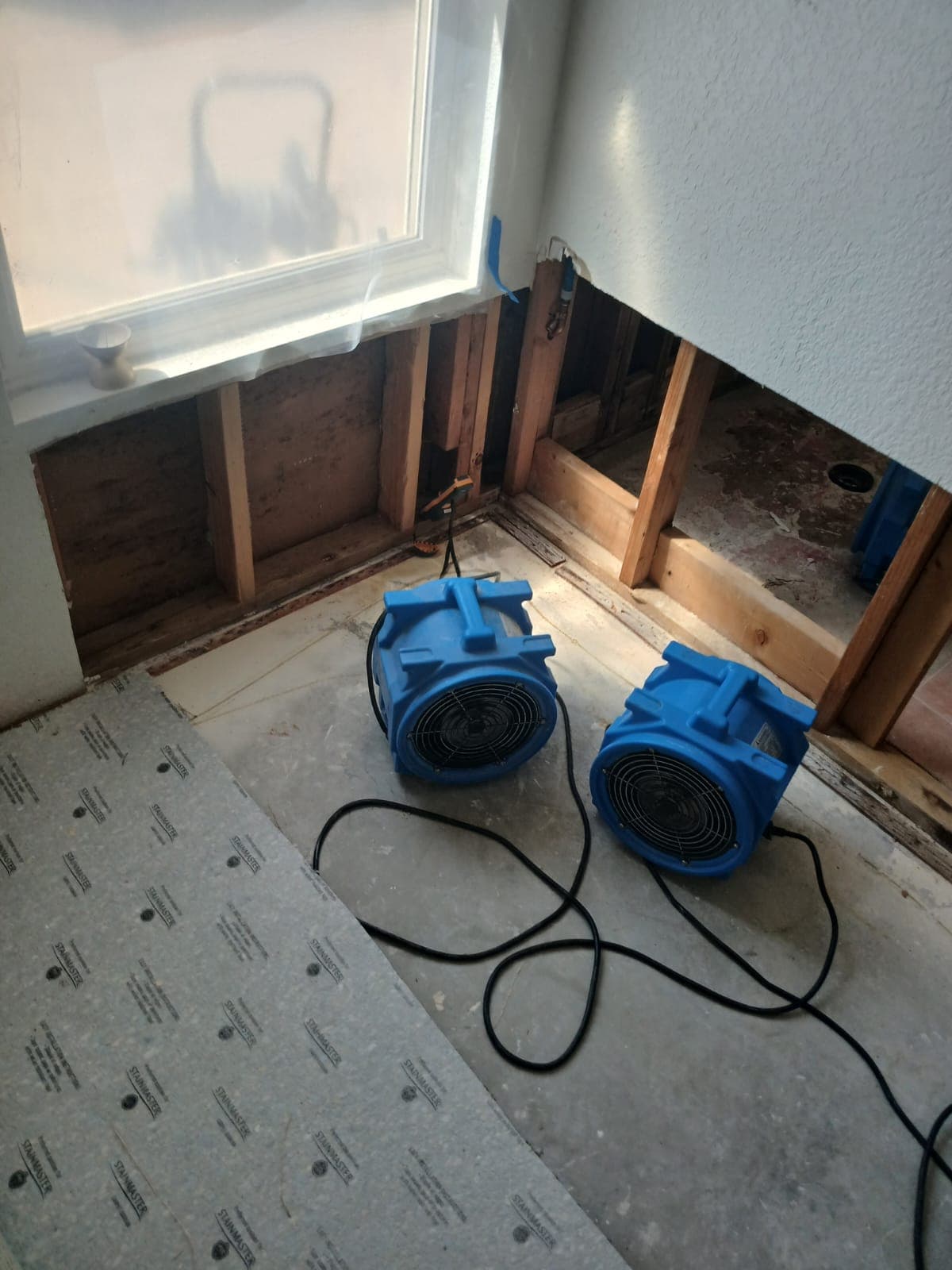
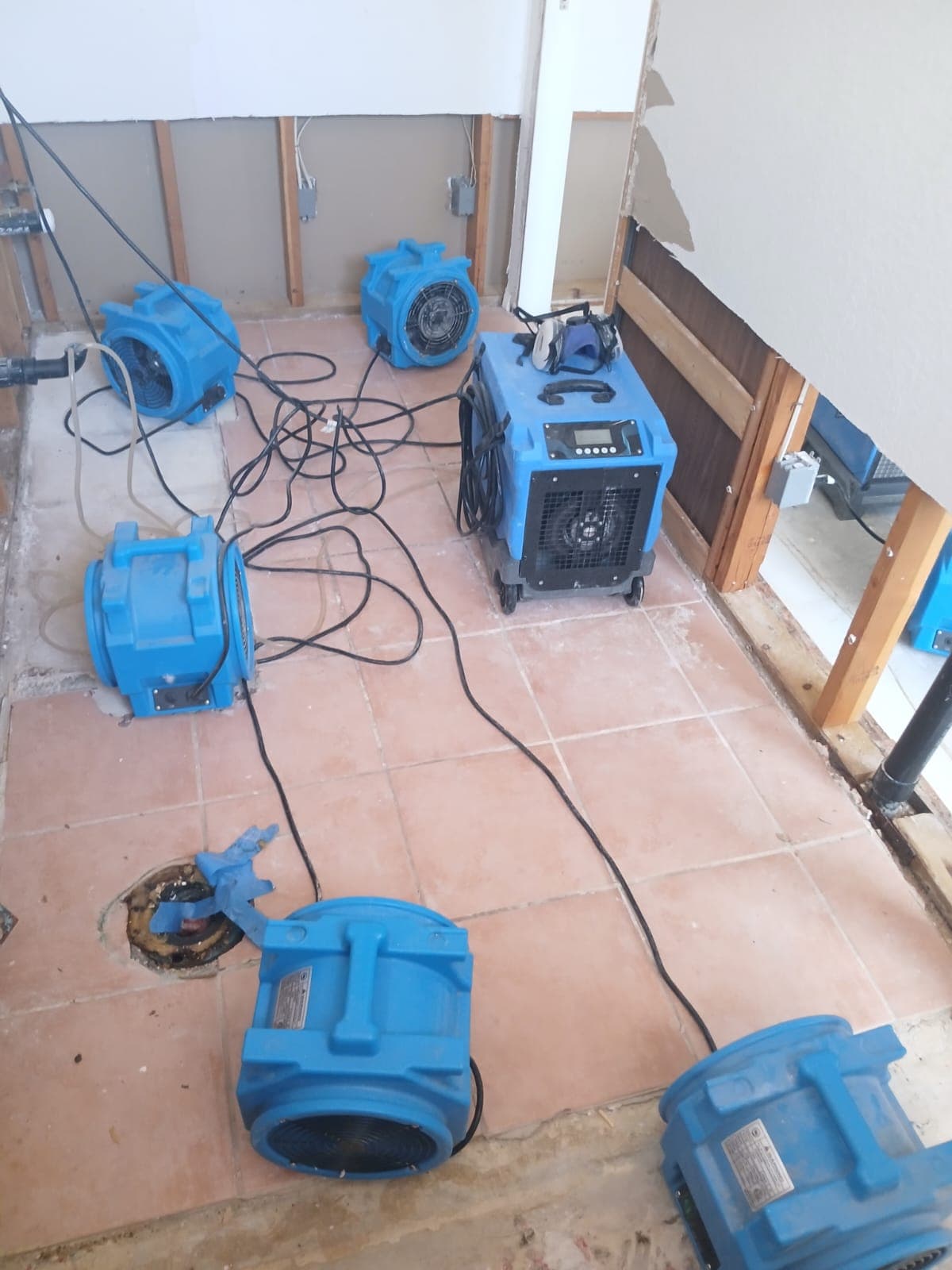
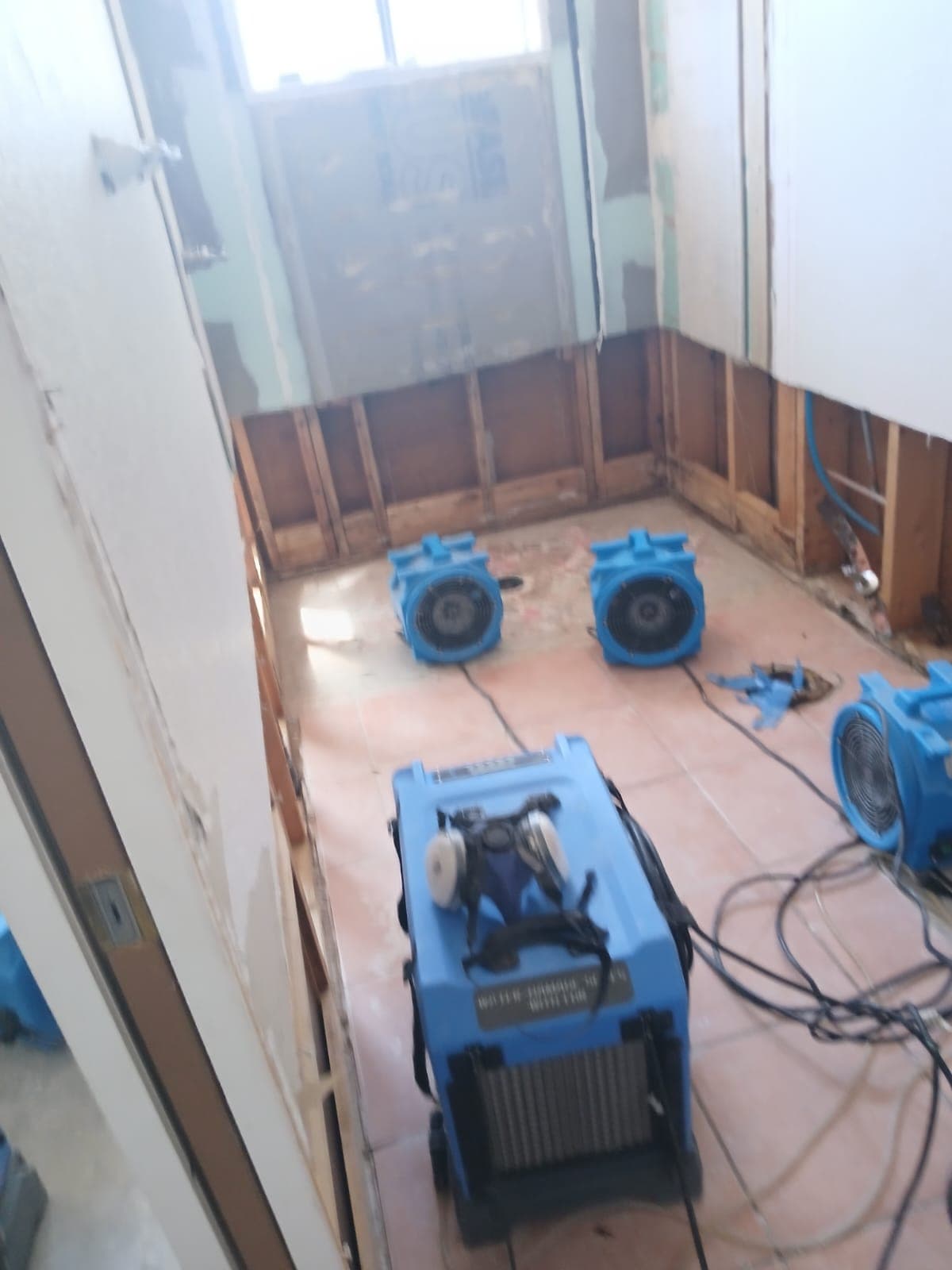
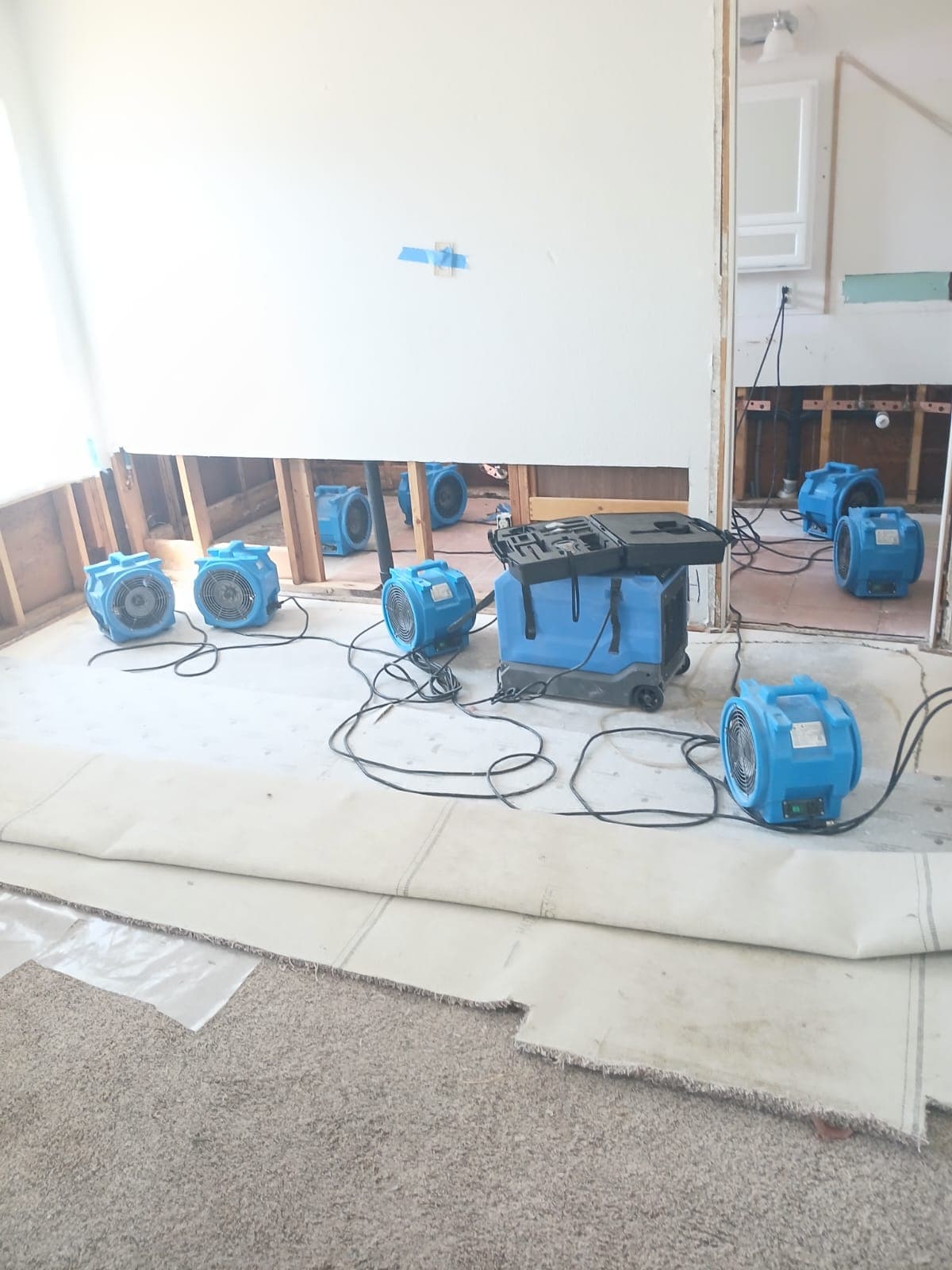
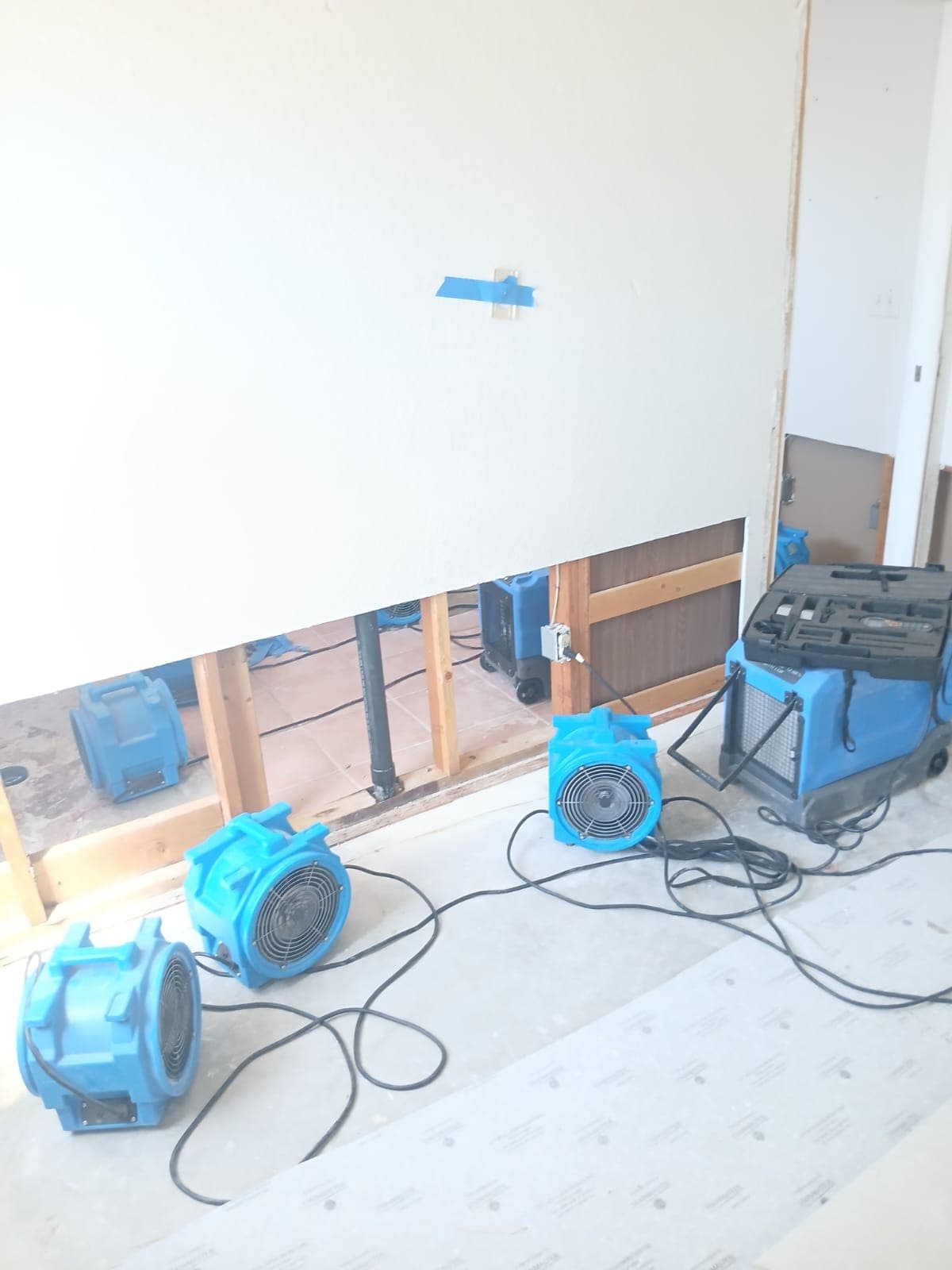
When a bathroom takes on Category 3 water - that's the contaminated stuff - you can't just dry it out and call it a day. The whole approach has to start with sanitizing the space before anything else happens. That's exactly how we handled this one. Sanitize first, then demo, then clean, then dryout. In that order, every time.
Once the affected drywall came down and the contaminated material was cleared out, we set up our air movers and commercial dehumidifiers throughout the space. The goal is to get aggressive airflow into the wall cavities and across the subfloor at the same time. Moisture doesn't just sit on the surface - it soaks into framing, subfloor, and anything it can reach. You have to attack it from every angle.
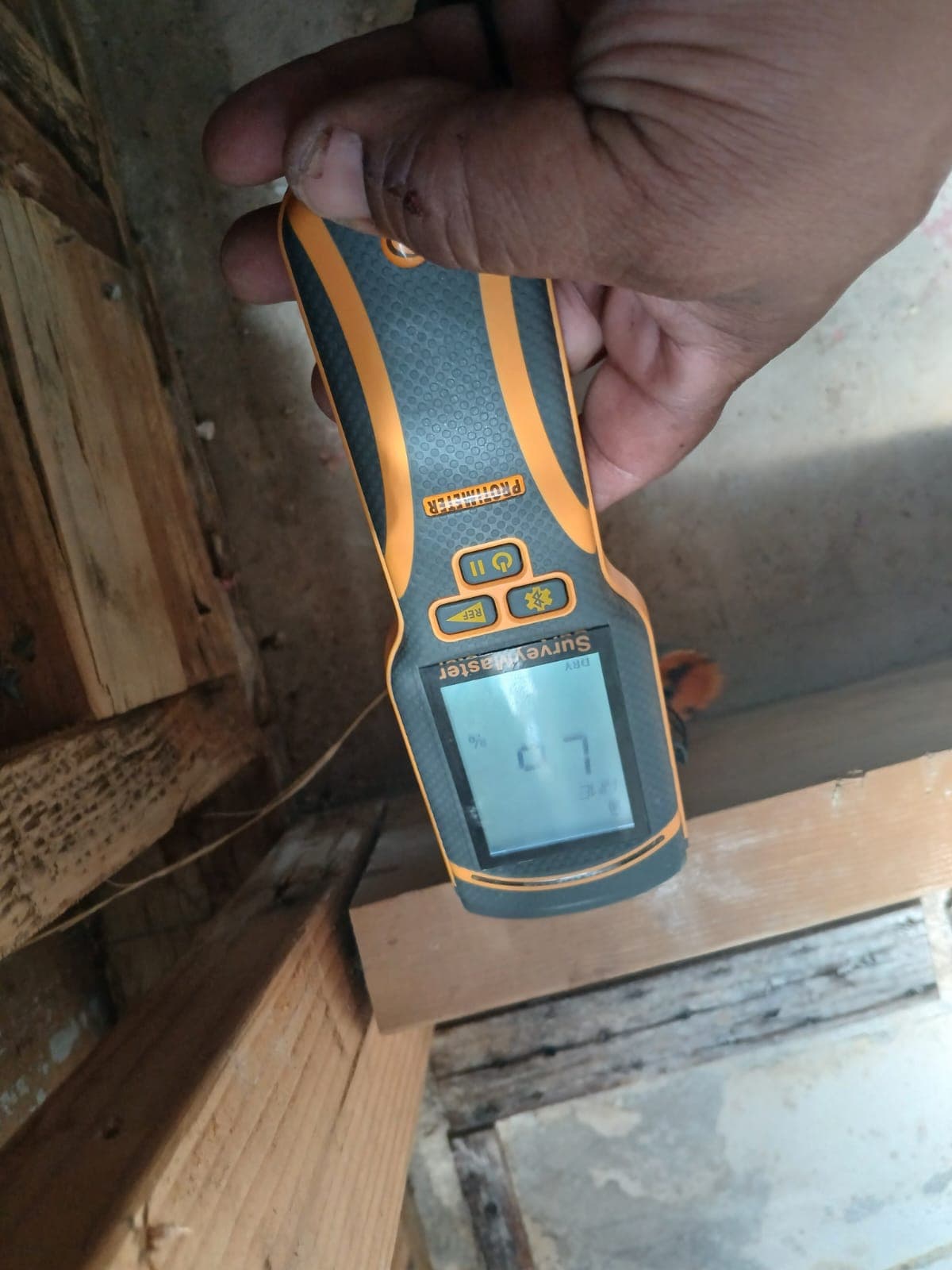
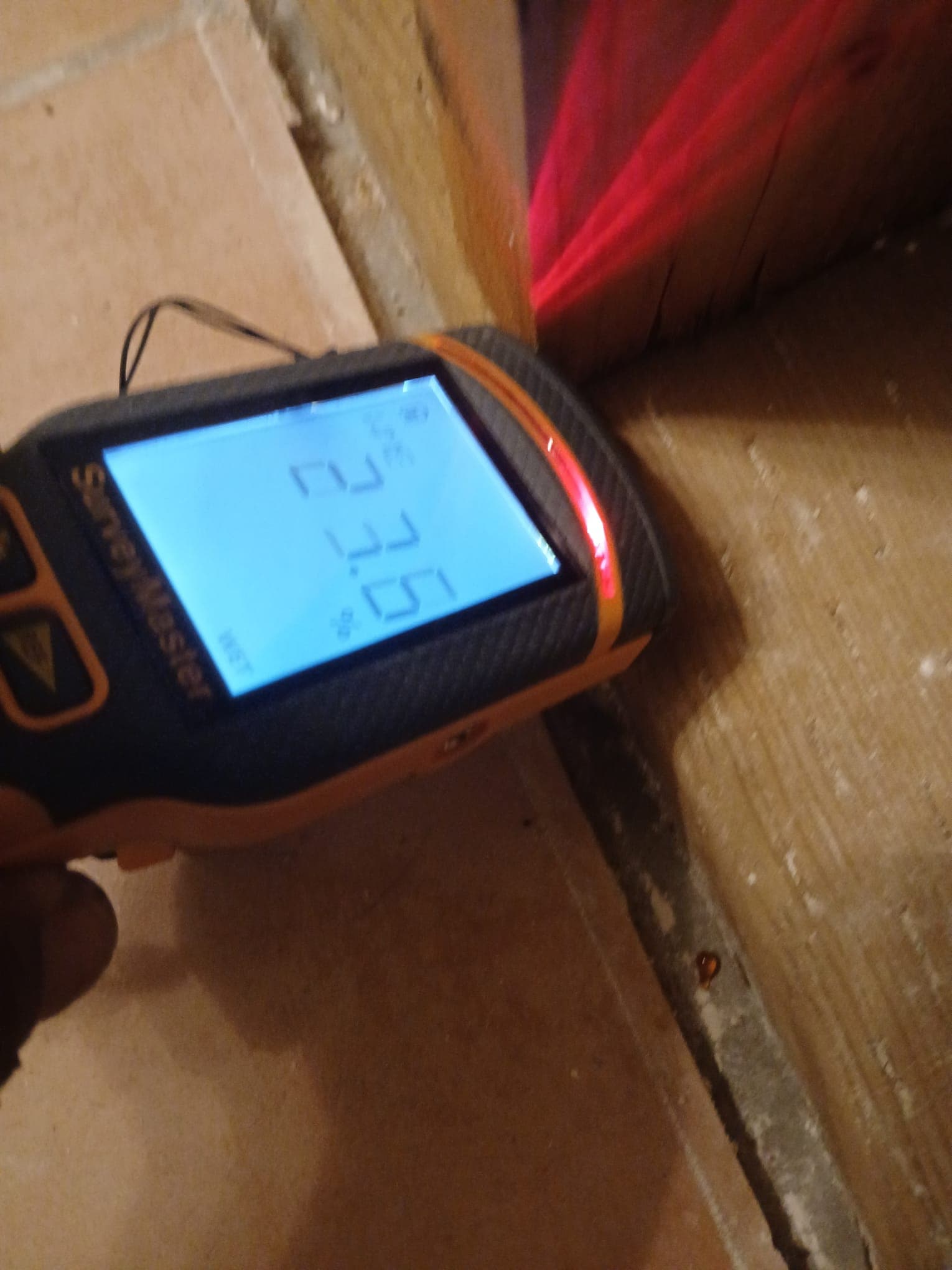
This is where the moisture meters come in. We're not guessing. We're probing the wood framing and subfloor at multiple points to get actual readings. It tells us exactly where the moisture is sitting and whether the dryout is making progress. No moisture meter means no accountability - and in a Cat 3 situation, that's not acceptable.
The dryout phase takes time and patience. Air movers get repositioned as the readings change. Dehumidifiers run continuously, pulling moisture out of the air so it doesn't just resettle into the structure. We check readings regularly until the framing hits safe levels. Only then is it actually ready for rebuild.
Water damage restoration isn't a one-step job. It's a process - and every step matters. Skip the sanitizing on a Cat 3 loss and you're setting up a mold and health problem down the road. Skip the moisture monitoring and you'll be rebuilding over wet wood. We handle flood cleanup the right way so the rebuild actually lasts.