Bathroom Reconstruction After Water Damage - Here's What That Actually Looks Like
Water damage doesn't just ruin what you can see. It gets into the walls, behind the fixtures, under the flooring - and if it's not handled correctly from the start, you end up with bigger problems down the road. That's exactly the kind of situation we stepped into here. A bathroom that had taken on serious damage and needed more than a quick fix.
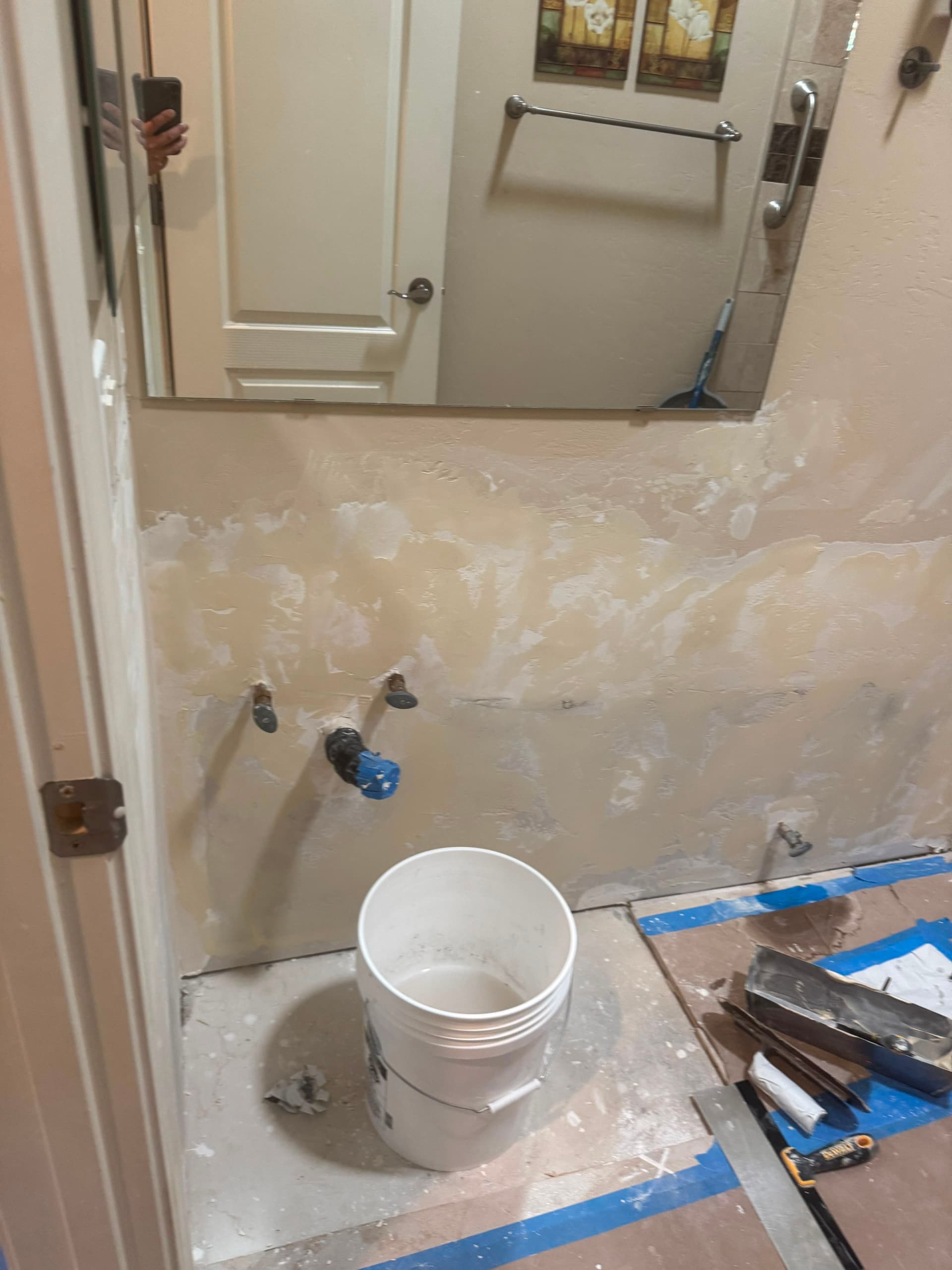
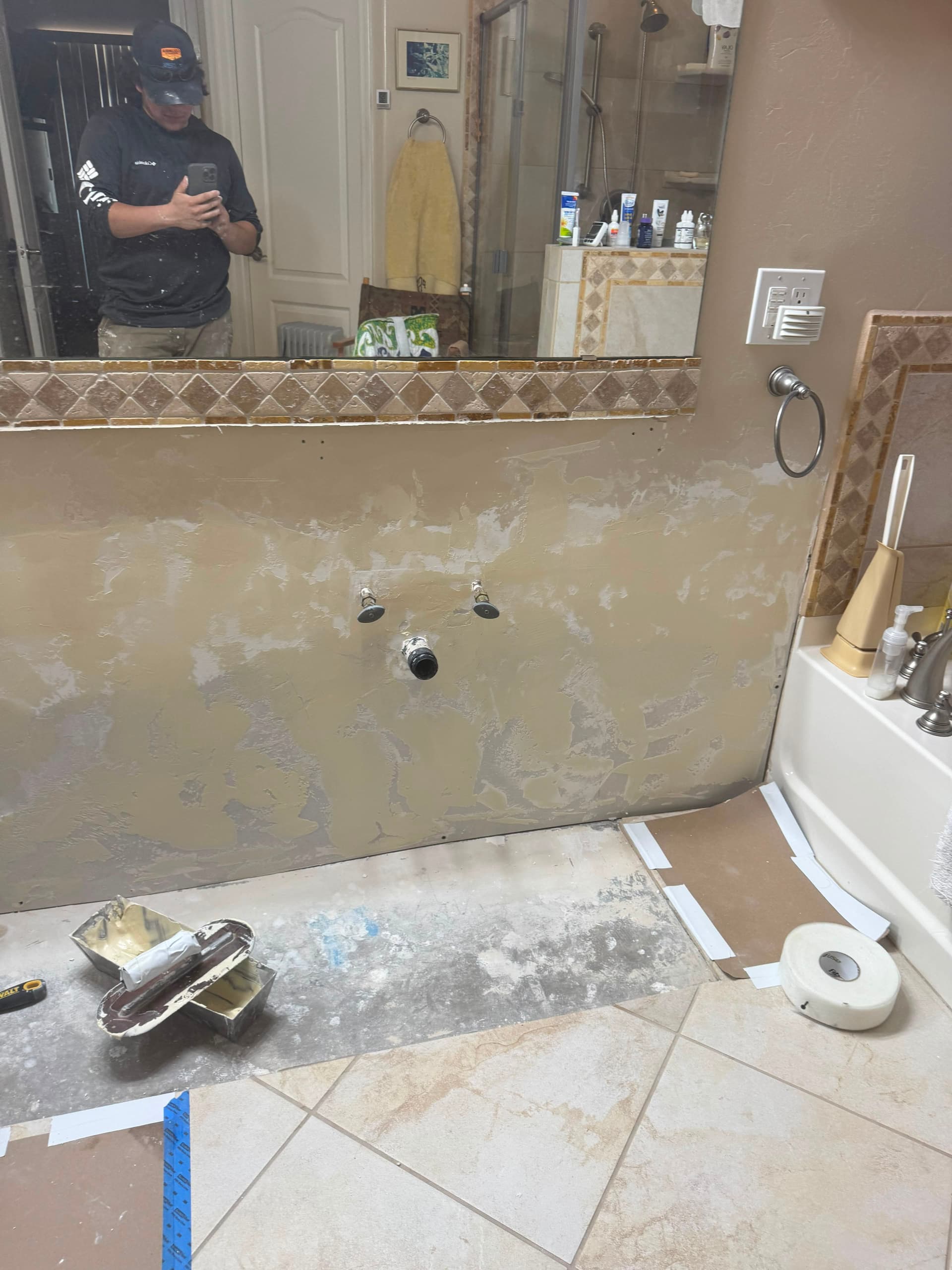
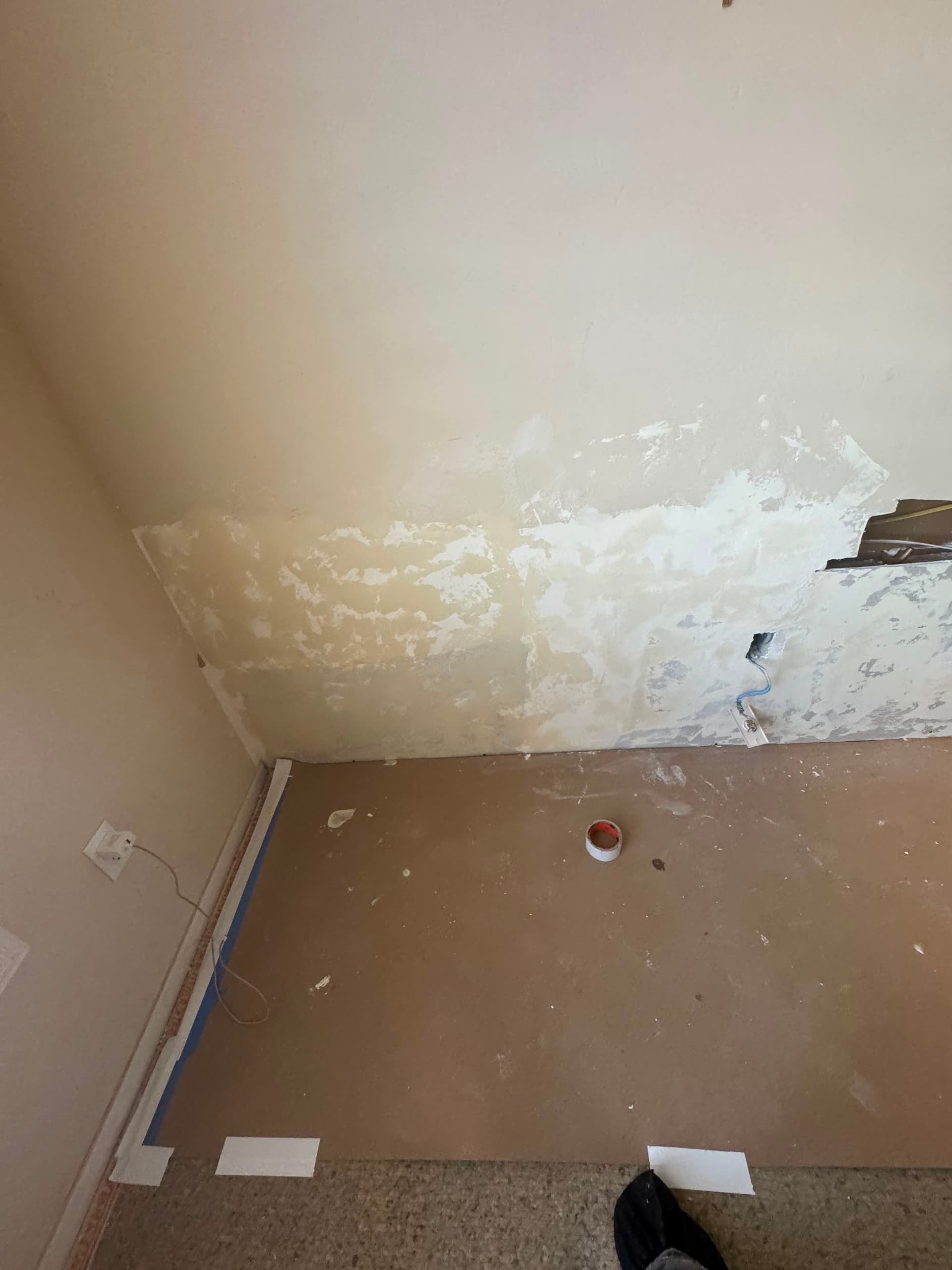
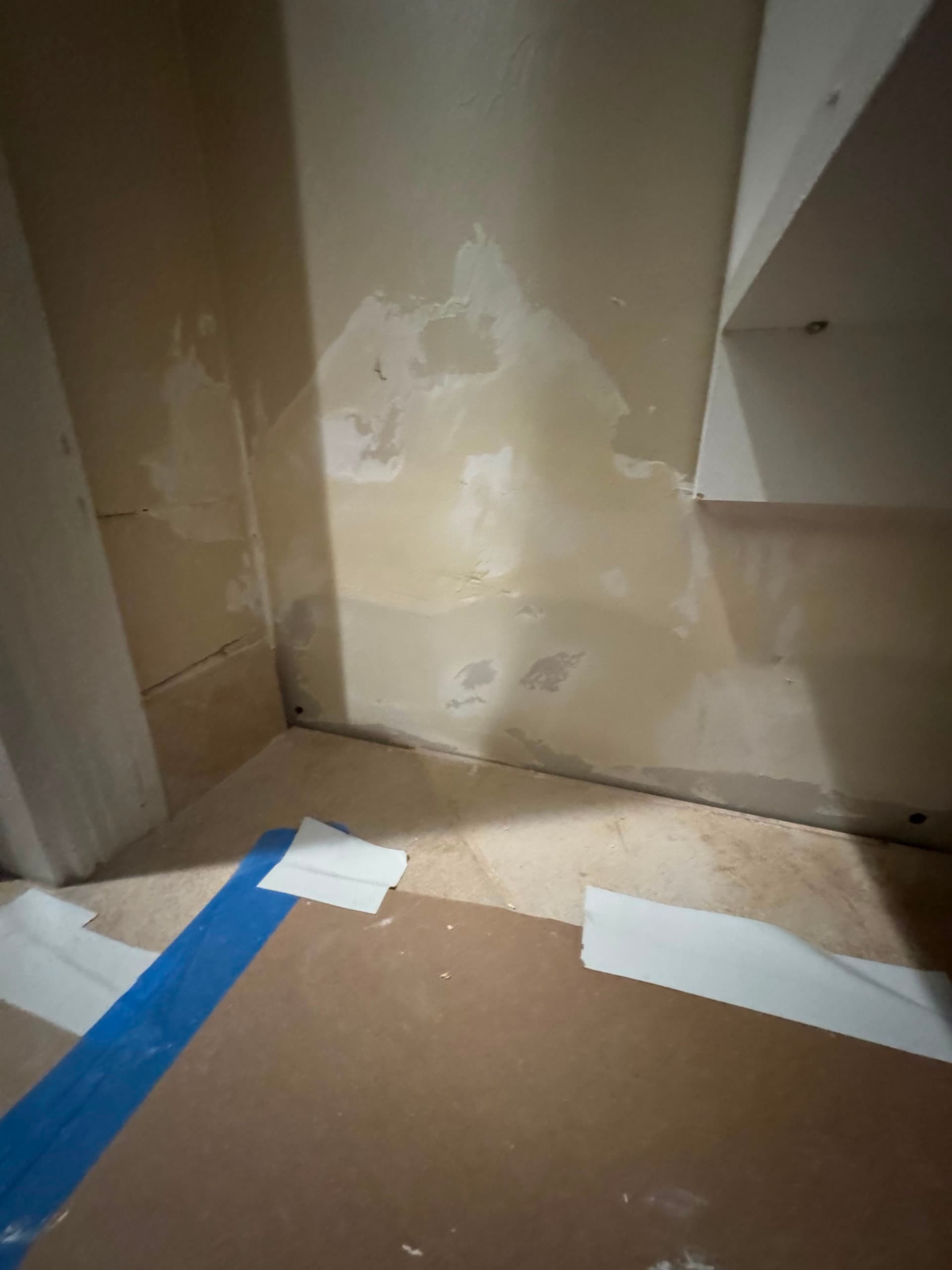
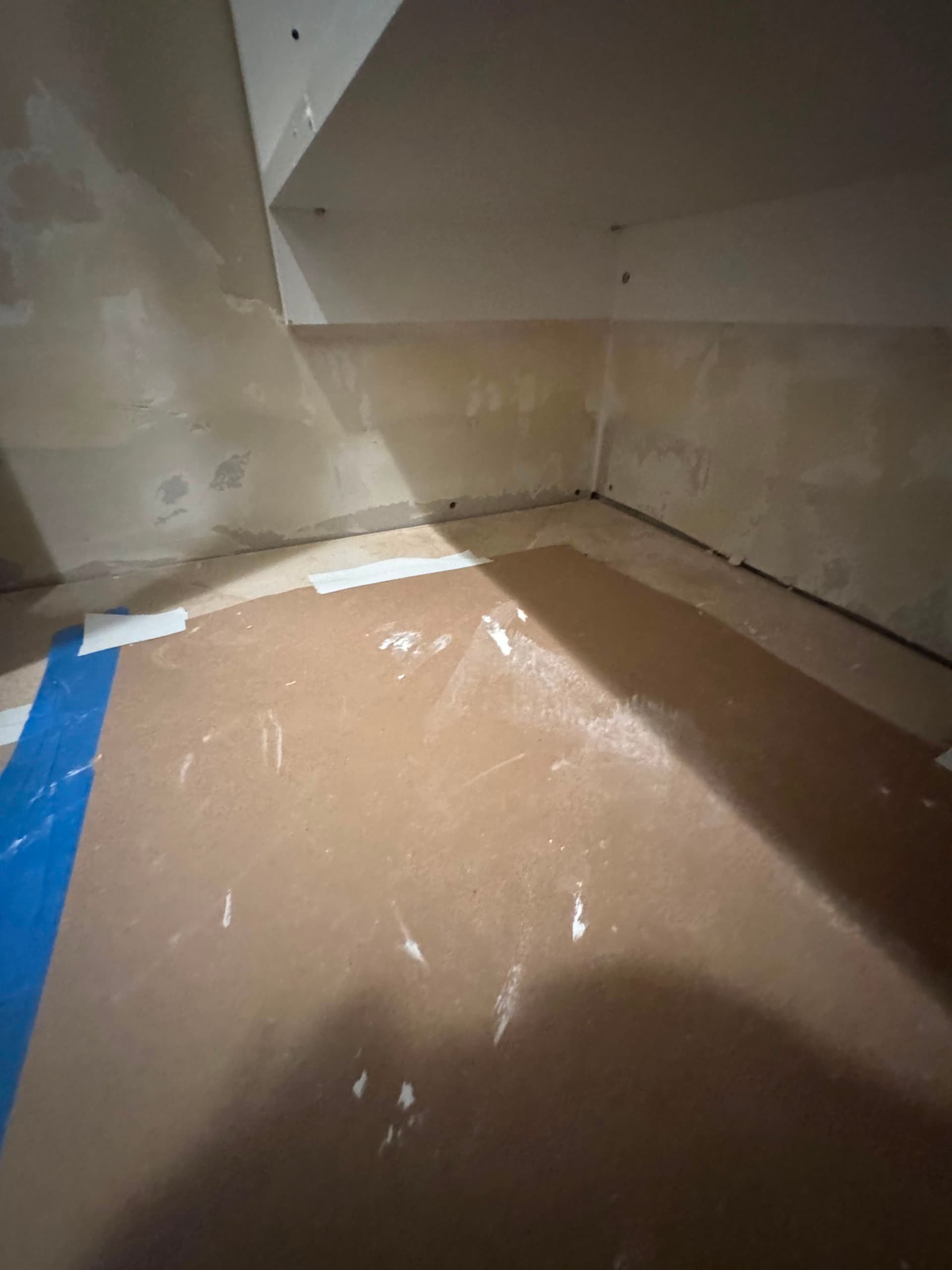
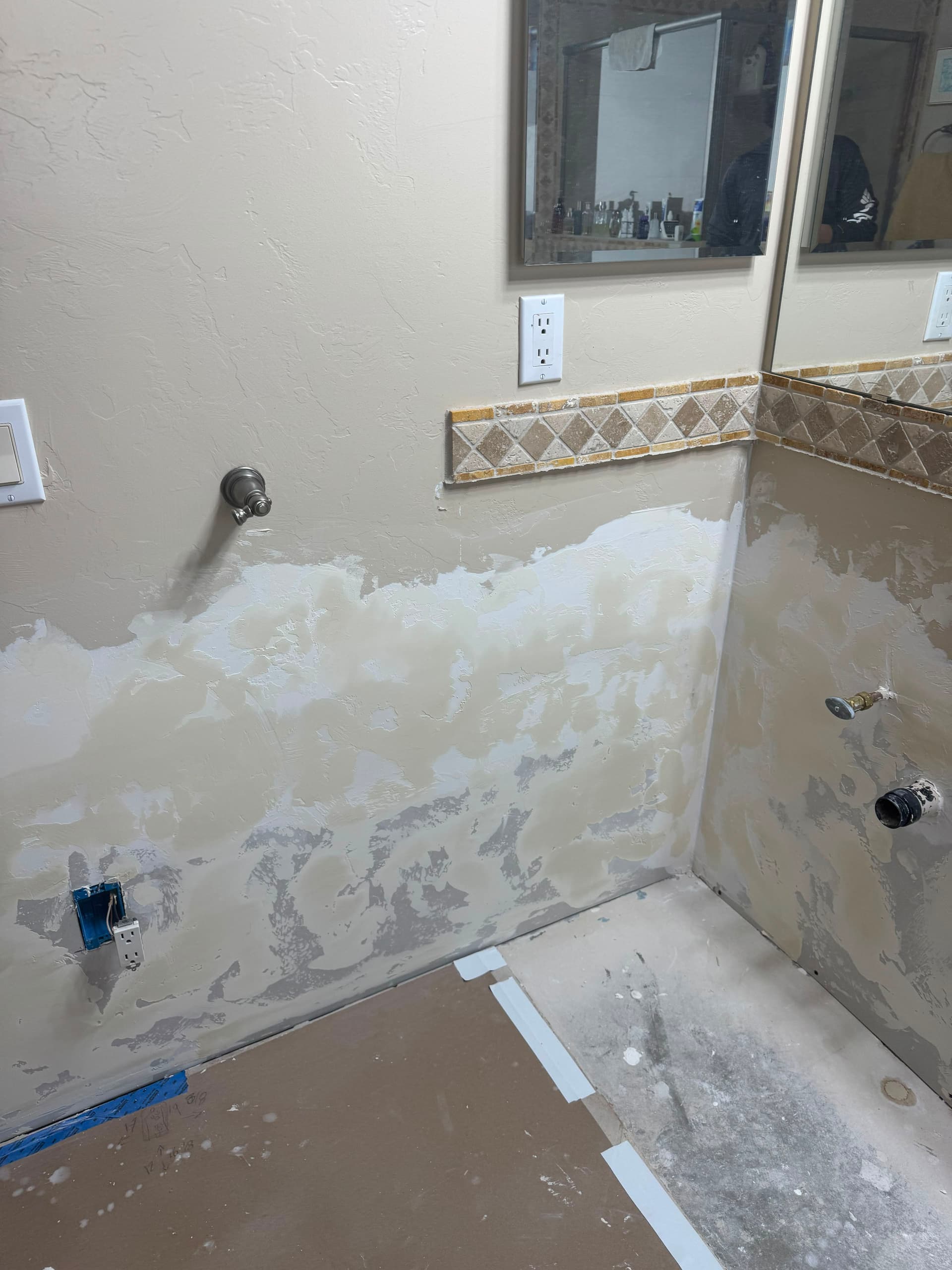
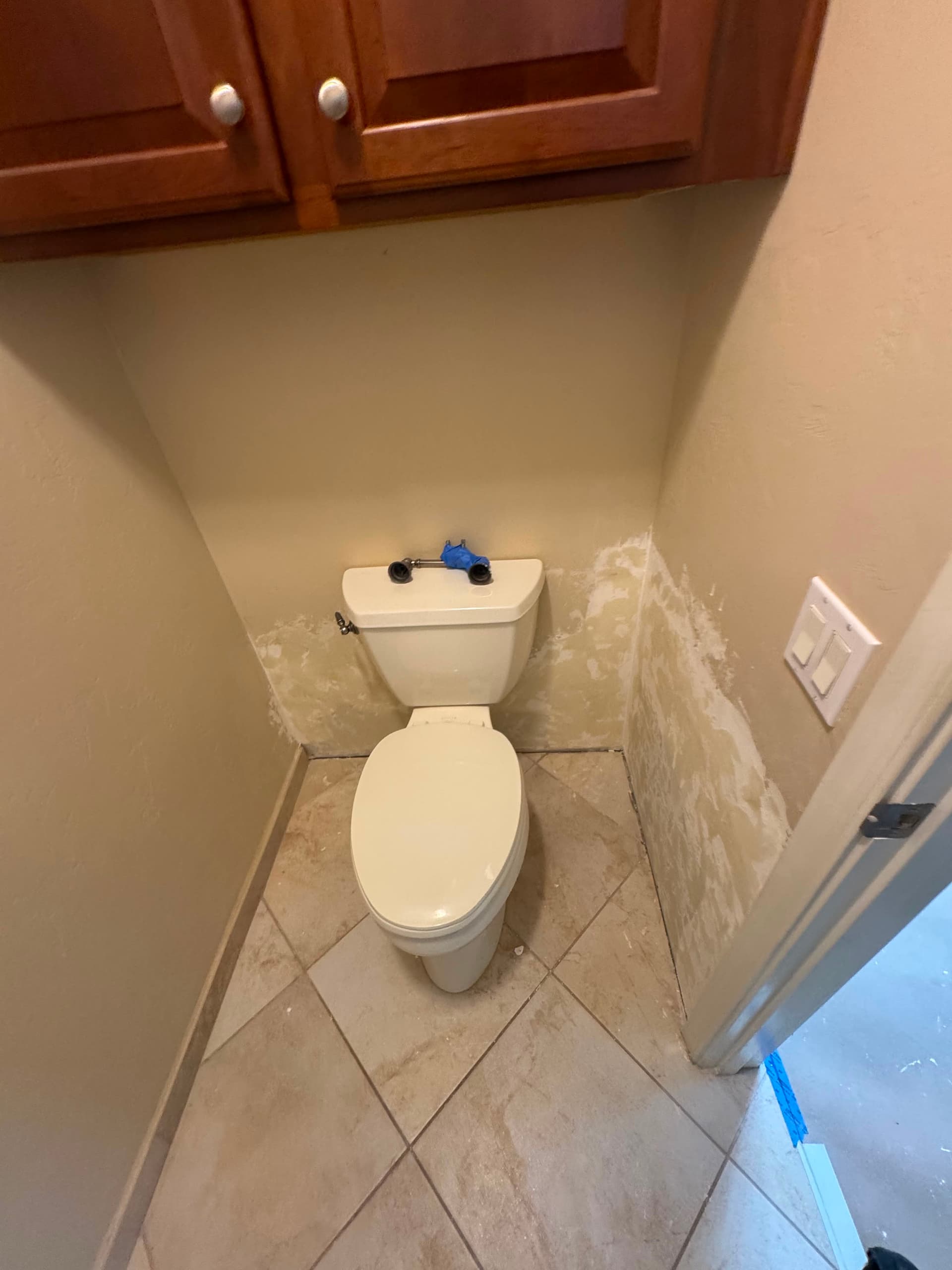
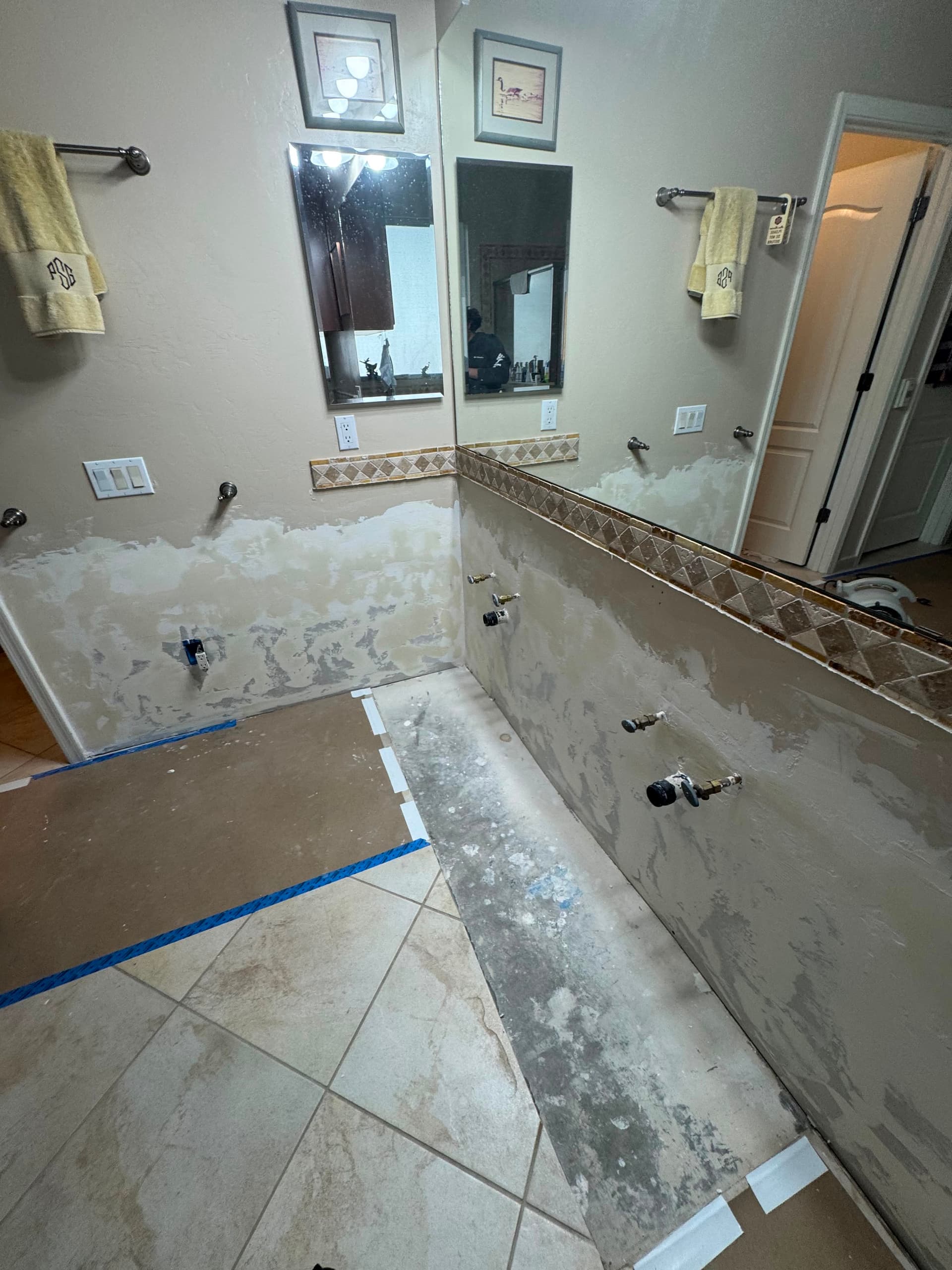
Once the emergency side of things was handled, the real work began. We stripped the damaged drywall down to a clean surface across the entire bathroom - walls around the vanity area, the toilet compartment, and into the adjoining spaces that had been affected. Every damaged section had to come out. No patching over it, no shortcuts. Blue tape down to protect what was staying, paper laid over the floors, and then we got to work prepping the surfaces for reconstruction.
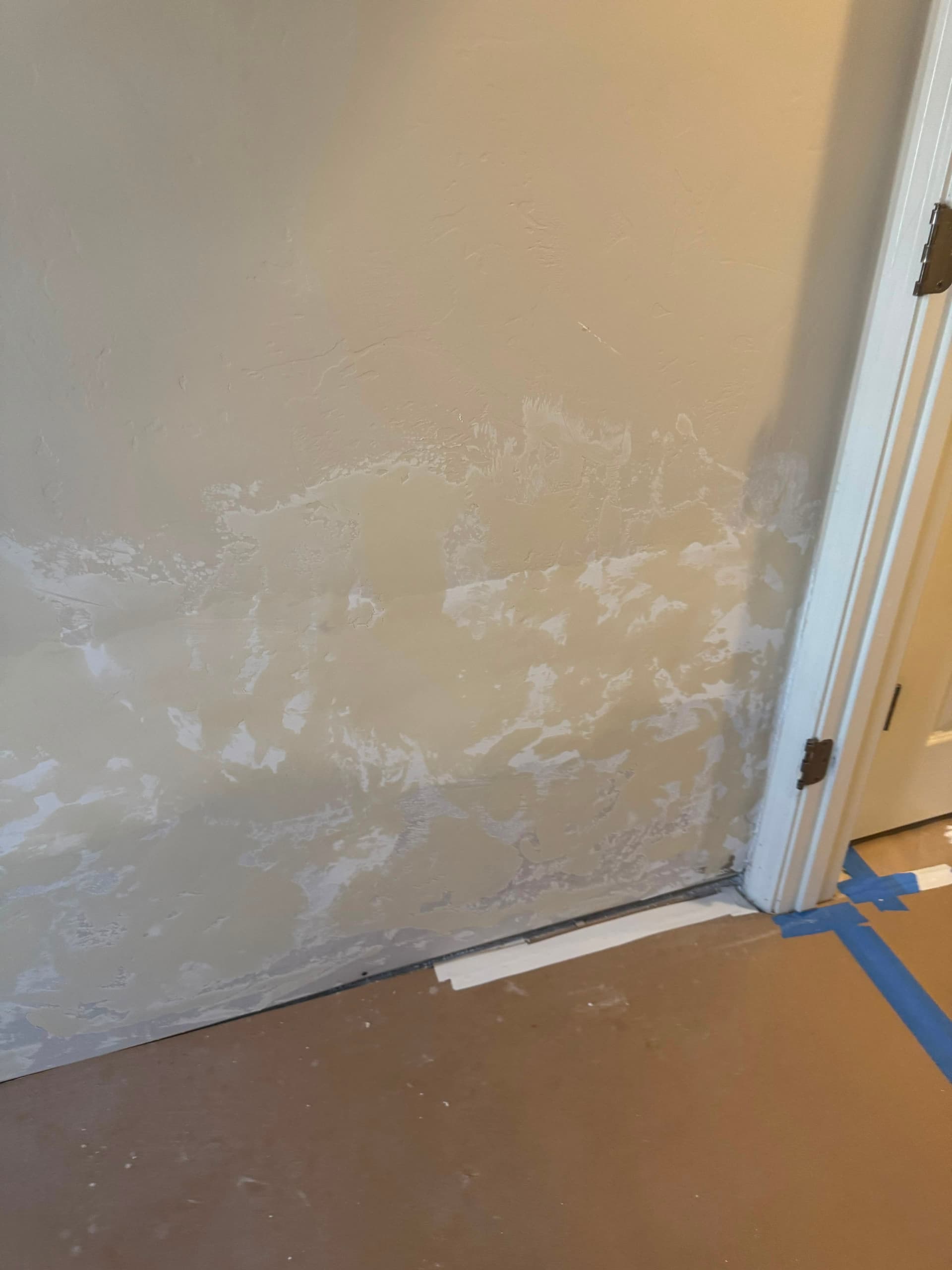
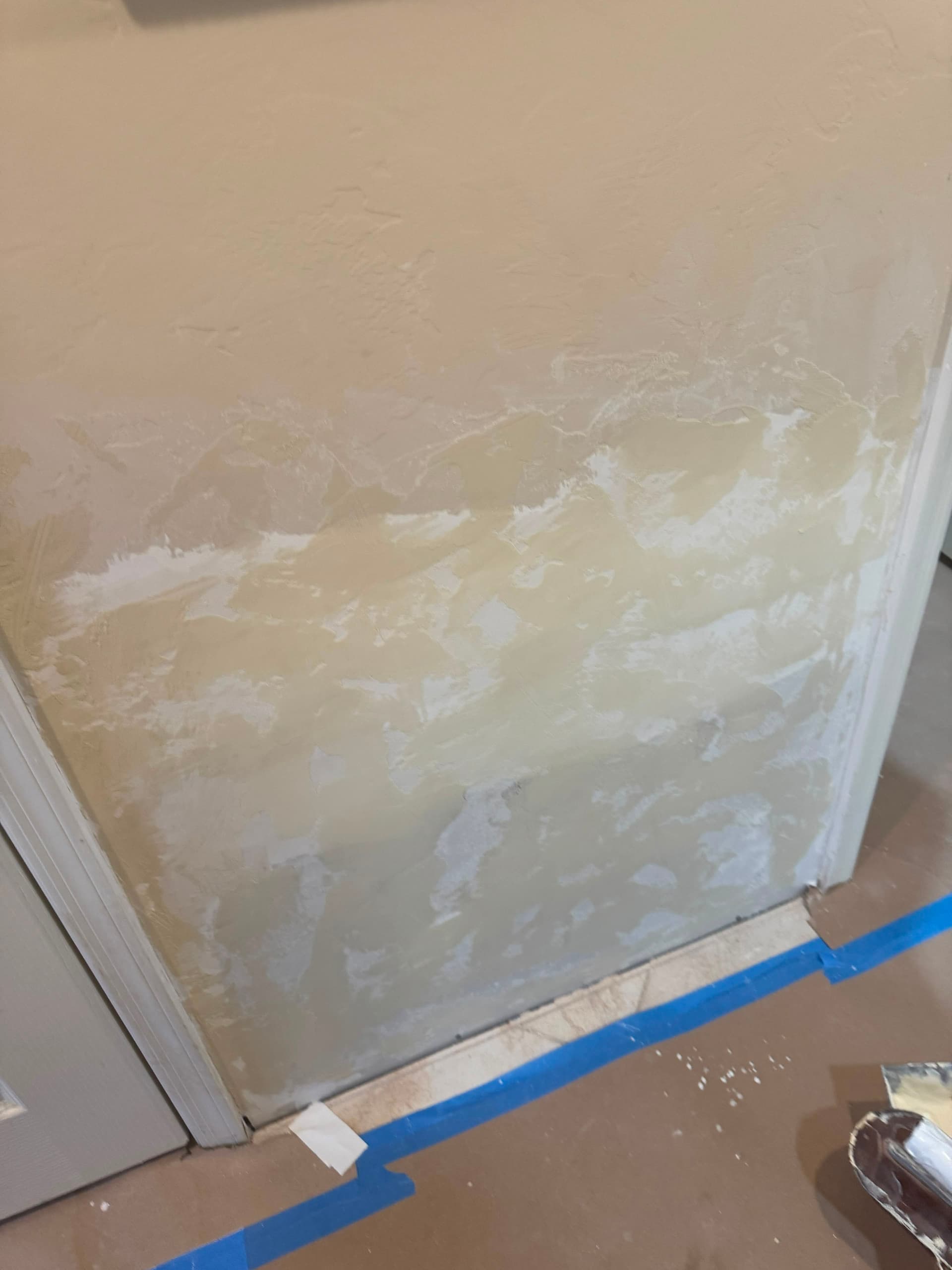
What you're looking at here is the mid-process reality of doing this the right way. Plumbing stubs capped and protected. Existing tile borders preserved where they weren't compromised. New drywall mudded and skim-coated across multiple walls and corners. It's not glamorous work, but it's the foundation everything else depends on. Skip this step or rush it, and the finished product shows it.
This is the part most homeowners never see - and honestly, it's the part that matters most. Getting the walls back to a solid, flat, paintable surface before any finish work happens takes time and skill. We take that seriously because the quality of everything that comes after - the tile, the fixtures, the final coat - is only as good as what's underneath it.
If your home took damage and you're now looking at reconstruction, this is the kind of work we do every day. From the cleanup phase all the way through the bathroom remodel, we handle it as one continuous process so nothing falls through the cracks.